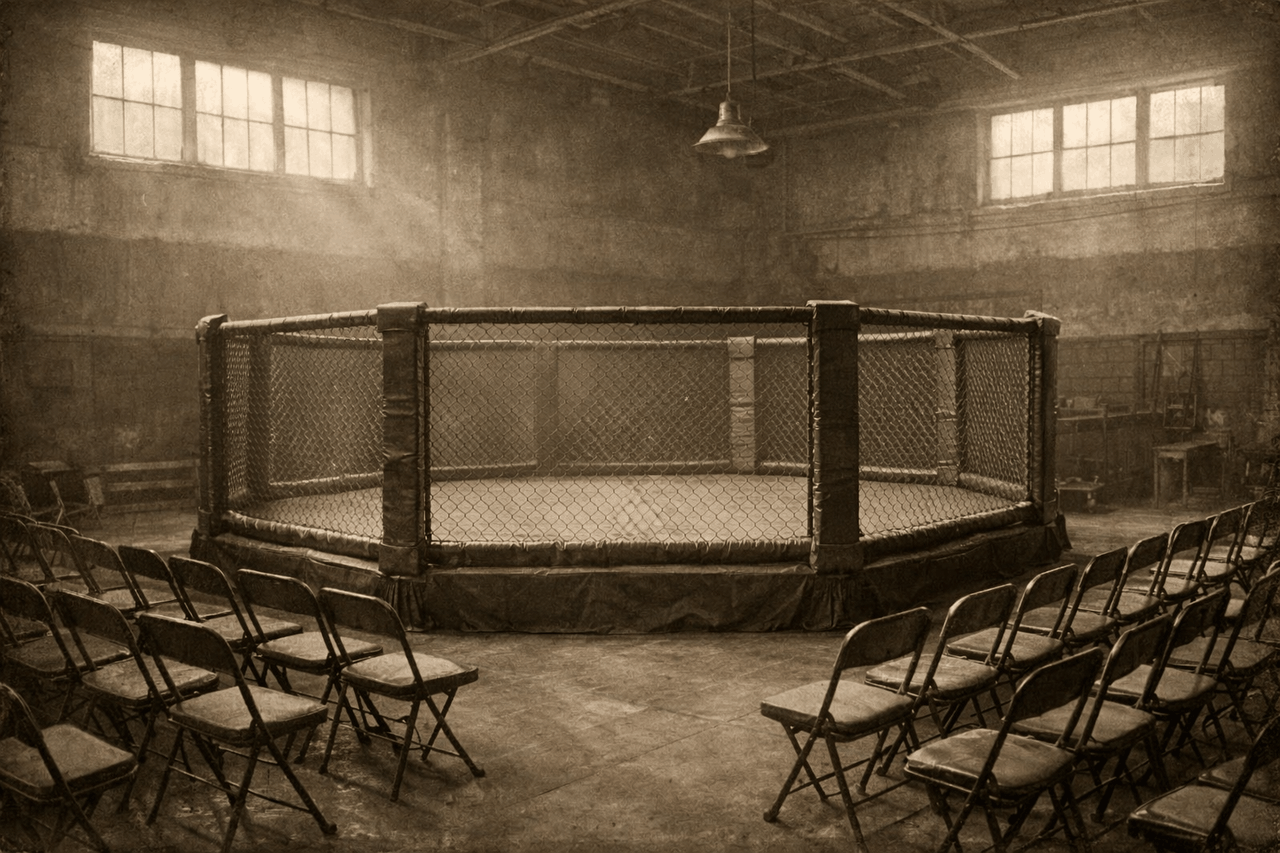
You put on UFC 1 footage and wait for something familiar: a round-ending horn, a break between rounds, perhaps a scorecard if neither fighter finishes. Those expectations belong to a later version of the sport. UFC 1, held November 12, 1993, in Denver, was an eight-man tournament without weight classes or judges. Understanding the original… Continue reading Original UFC Rules: How the Sport’s Regulations Evolved
Category: MMA Rules & Judging
Follow the referee’s decisions, scorecards, round lengths and the evolution of the rules.
UFC Rounds: Main Events, Title Fights, and Exceptions

UFC title fights and main events, including non-title headliners, are typically scheduled for five five-minute rounds. Most other UFC bouts are scheduled for three five-minute rounds. “Scheduled” matters: a finish or another official stoppage can end the fight before that time runs out. If a non-title main event reaches Round 4, the fight is following… Continue reading UFC Rounds: Main Events, Title Fights, and Exceptions
UFC Scoring Explained: How Judges Score a Round

UFC judges score each round by comparing effective striking and grappling: whose legal offense had the greater effect on the opponent. Before point deductions, the round winner receives 10 points and the opponent receives 9 or fewer. A close winning round is usually 10–9; a substantial advantage can earn 10–8. A 10–10 is rare. The… Continue reading UFC Scoring Explained: How Judges Score a Round
UFC Rules: What Is Legal in a Mixed Martial Arts Bout?

Picture one fighter dropping a knee to the canvas while the opponent stays upright. UFC rules permit regulated striking and grappling both standing and on the ground, but that change of position matters: under Nevada’s rules, a knee or kick to the grounded fighter’s head would be a foul. To follow a call, watch the… Continue reading UFC Rules: What Is Legal in a Mixed Martial Arts Bout?